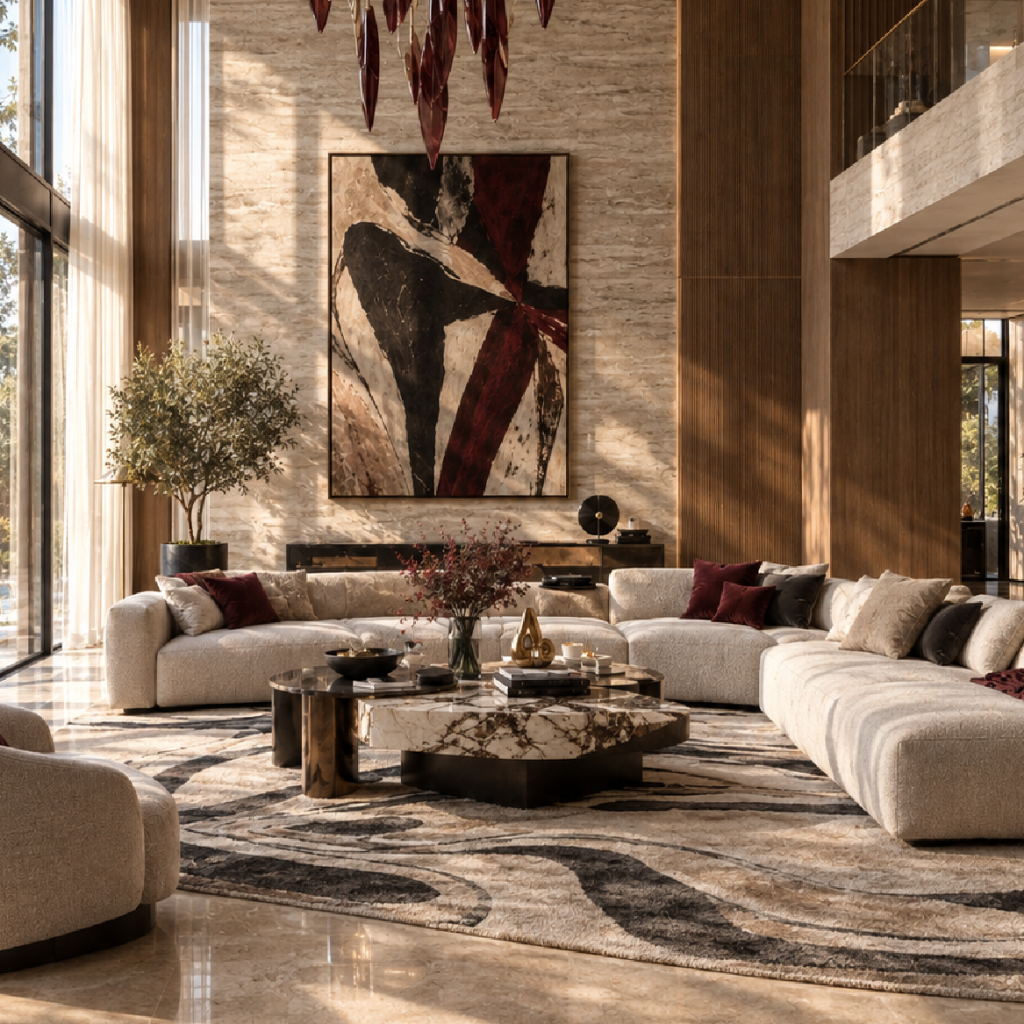
1️⃣ Natural Light
Natural daylight can make interiors feel more open, comfortable, and connected to the outside world. Maximizing windows, using appropriate openings, and allowing daylight to penetrate deeper into a space can significantly improve the overall experience
2️⃣ Connection With Nature
Introducing greenery, natural materials, outdoor views, and visual connections to gardens or landscapes can create a calmer and more relaxing atmosphere
A well-designed space should not feel disconnected from nature—it should bring elements of nature closer to the people using it
3️⃣ Thoughtful Space Planning
A beautiful space can still feel uncomfortable if its layout doesn’t work properly.
Good planning creates clear circulation, comfortable proportions, functional zones, and enough personal space, helping people move through their environment naturally without unnecessary visual or physical clutter.
4️⃣ The Right Colors and Materials
Colors, textures, and materials strongly influence the atmosphere of an interior
Soft neutral tones, natural textures, warm finishes, and carefully selected accent colors can help create spaces that feel calm, balanced, and welcoming without becoming visually overwhelming
5️⃣ Acoustic Comfort
Mental well-being is not only visual
Constant noise and poor acoustic control can make spaces stressful and difficult to concentrate in. Proper material selection, spatial planning, and acoustic solutions can help create quieter and more comfortable environments
6️⃣ Comfortable Lighting Design
Artificial lighting should complement natural daylight and respond to the function of each space
From warm ambient lighting in residential areas to focused lighting in workspaces, a carefully designed lighting system can create different moods while maintaining visual comfort and functionality
7️⃣ Creating Spaces for Connection
Our environments can influence how we interact with the people around us
Thoughtful layouts can create comfortable areas for family gatherings, conversations, collaboration, and social interaction, while also providing quieter spaces when privacy and personal time are needed
8️⃣ Decluttered and Organized Environments
Visual clutter can make a space feel chaotic
Integrated storage, clean circulation paths, and a clear organization of furniture and elements can create a more balanced and visually comfortable environment
Good design doesn’t necessarily mean adding more—it often means knowing what to leave out
9️⃣ Comfort and Functionality
Furniture proportions, ergonomics, temperature, ventilation, movement, and accessibility all contribute to how comfortable a person feels within a space
The best interiors are not simply beautiful; they are designed around the real needs and daily behaviors of their users
🔟 Designing for the Human Experience
Perhaps the most important principle is to put people at the center of the design process
Every architectural decision—from the building orientation to the smallest interior detail—should consider who will use the space, how they will use it, and how the environment can support their everyday experience